Is Your Motorhome Ready for Off-Grid Adventures?
01/09/2026
More and more motorhome and campervan owners are choosing to spend time away from campsites and mains electricity. Whether you’re heading into the countryside for a weekend, travelling around Europe or simply want greater freedom when touring, having a reliable electrical system is essential for comfortable off-grid adventures.
But what does a good off-grid electrical system actually-look like?
How to build a reliable off-grid electrical system
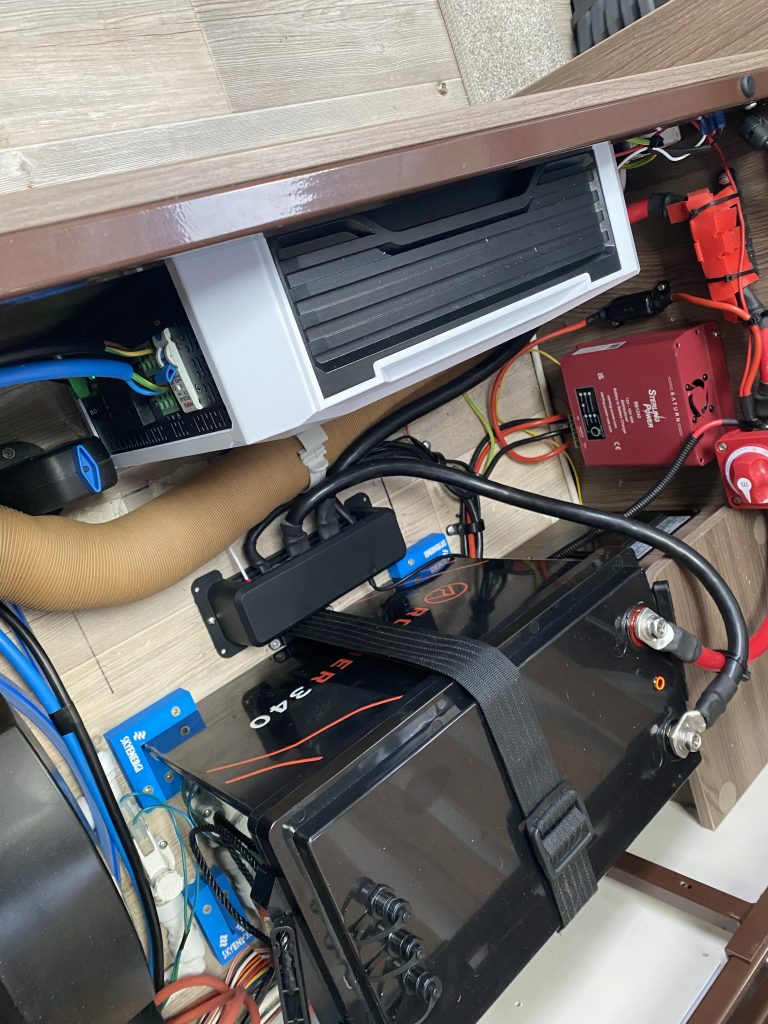
The key is to make sure your battery, solar charging, mains charging and inverter systems work together. At Motorhome Supplies, we regularly upgrade motorhomes and campervans to provide greater battery capacity, improved charging and more independence away from an EHU (electric hook-up).
1. Lithium Batteries – More Usable Power
The battery is at the heart of any off-grid electrical system.
Traditional lead-acid and AGM batteries can be suitable for some applications, but lithium batteries offer significant advantages for motorhome/campervan owners looking for greater usable capacity and improved performance.
A lithium battery can provide:
- Much greater usable battery capacity
- Faster charging
- A longer service life
- Reduced weight compared with many traditional batteries
- Consistent voltage as the battery discharges
- The ability to support higher electrical loads
For many motorhomes/campervans, upgrading to lithium is one of the biggest improvements you can make to your electrical system.
However, simply installing a larger battery isn’t always the answer. The charging system, battery management system, wiring and electrical loads all need to be considered to ensure the installation is safe, reliable and suitable for the vehicle.
2. Solar Panels – Replace the Energy You Use
Solar power is one of the best ways to extend your time away from mains electricity.
A correctly sized solar system can replenish energy used during the day and help keep your leisure batteries charged while you’re travelling or parked off grid.
Your solar requirements will depend on several factors, including:
- Battery capacity
- Daily electrical consumption
- Roof space available
- Number and size of solar panels
- Time of year
- Your typical touring locations
- Whether you regularly use high-power appliances
It’s important to remember that solar panels don’t produce their maximum rated output all the time. Weather conditions, sunlight levels, panel orientation and shading can all affect performance.
This is why we recommend designing the system around how you actually-use your motorhome, rather than simply installing as much solar as possible.
3. Charging – Don’t Rely on Solar Alone
Solar is an important part of an off-grid system, but it shouldn’t necessarily be your only source of charging.
Modern motorhomes can benefit from multiple charging sources, including:
Solar charging
Uses energy from the sun to replenish your leisure batteries.
Alternator charging
Allows the vehicle’s alternator to charge your leisure battery system while driving. Modern vehicles may require an appropriate DC-DC charging system to ensure the leisure batteries are charged correctly.
Mains/EHU charging
Provides a reliable way of charging the battery when you’re connected to campsite or home mains electricity.
Combining these charging methods provides greater flexibility and helps ensure your batteries are maintained correctly in a wide range of touring conditions.
4. Inverters – Take Mains Power Off-Grid
One of the biggest limitations when travelling off grid is being unable to use conventional 230V appliances.
This is where an inverter can make a significant difference.
An inverter converts the battery’s DC power into 230V AC electricity, allowing you to run suitable mains-powered appliances without being connected to an EHU.
Depending on your requirements, an inverter can potentially power equipment such as:
- TVs
- Laptop and phone chargers
- Kitchen appliances
- Coffee machines
- Microwaves
- Other suitable 230V appliances
However, high-power appliances can place a significant demand on your batteries. A 2,000W appliance, for example, requires considerably more battery power than a small phone charger.
This is why inverter size, battery capacity, cabling and charging capability all need to be considered together.
The Importance of Designing the Whole System
One of the most common mistakes when upgrading a motorhome electrical system is looking at each component individually.
A 300Ah lithium battery, large solar array and powerful inverter might sound impressive, but the system still needs to be correctly designed and installed as a complete package.
For example, increasing battery capacity without sufficient charging capability may mean the batteries cannot be replenished effectively. Similarly, installing a powerful inverter requires suitable battery capacity, cabling, protection and installation methods.
A good off-grid system should consider:
Battery capacity → Solar generation → Alternator charging → Mains charging → Inverter requirements → Your daily electrical usage
Getting the balance right means you can enjoy greater independence without unnecessarily spending money on equipment you don’t actually-need.
How Much Power Do You Really Need?
Before upgrading your motorhome, think about how you use it.
Ask yourself:
- How many days do you normally spend off grid?
- Do you use a TV regularly, is this a 12V TV?
- Do you work from your motorhome?
- Do you use a coffee machine or microwave?
- Do you run a fridge from your leisure battery, what type of fridge?
- Do you use heating or air conditioning?
- How much solar can realistically fit on your roof?
- Do you regularly travel between off-grid locations?
The answers will help determine the right combination of battery capacity, solar generation, charging and inverter power.
Ready to Improve Your Motorhome’s Off-Grid Capability?
At Motorhome Supplies, we specialise in electrical and energy upgrades for motorhomes and campervans.
From lithium battery upgrades and solar systems to DC-DC charging, inverters and complete off-grid electrical solutions, we can assess your existing system and recommend an upgrade based on your vehicle and the way you use it.
You don’t necessarily need the biggest battery or the largest solar array. You need a system that works together and is designed around your requirements.
If you’re planning your next off-grid adventure, get in touch with our team to discuss your requirements.
Motorhome Supplies
Wakefield, West Yorkshire
01924 654155 | 07881 797679
enquiries@motorhomesupplies.co.uk
Come and See Motorhome & Campervan Accessory Installation at the NEC Birmingham